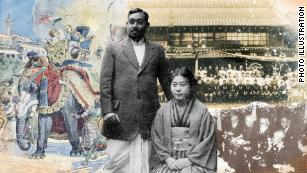
On December 23, 1912, an explosion rocked Delhi just as Lord Hardinge, the British viceroy of India, entered the new capital on the back of an elephant.
The bomb was meant to kill him, but instead it peppered Hardinge’s back with shrapnel, killed his attendant and cast a shadow over a day that was meant to mark the transition of India’s capital to Delhi from Kolkata.
The mastermind of the attack was Rash Behari Bose, a 26-year-old Bengali revolutionary who initially posed as a British loyalist while secretly working to overthrow colonial rule.The attack failed, but it gave Bose the opportunity to show the hundreds of people in attendance — and the world — that some Indians were prepared to expel the British by force.
The British government made India part of its empire in 1858 after suppressing a bloody and nationwide uprising known as the Indian Rebellion or Indian Mutiny — a protest against the rule of the British East India Company, which operated on behalf of the Crown.

An assassination attempt on Lord Charles Hardinge (1858-1944) Viceroy of India.
 Streetwisenetwork